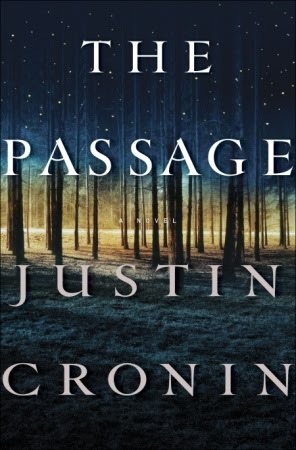
IT HAPPENED FAST. THIRTY-TWO MINUTES FOR ONE WORLD TO DIE, ANOTHER TO BE BORN.
…
Review of 'The Passage' on 'Goodreads'
3 stars
I'd never before thought there was a continuum between Jeff Long and Stephen King. Unfortunately The Passage sits in a spot along the continuum that just doesn't quite work for me. The book never quite clicked the way I'd hoped, even though it has stuff I like: epic scope, no fear of upsetting its own status quo, lots of detail and texture.
After an intense and gripping start the story kind of took off in a direction that wasn't compelling, the characters didn't make me feel anything, and the plot felt just like things that were happening. I was not so much annoyed or disgusted by The Passage as I was unmoved - just interested enough to keep reading to see where the story went, but not really feeling it.
I'd never before thought there was a continuum between Jeff Long and Stephen King. Unfortunately The Passage sits in a spot along the continuum that just doesn't quite work for me. The book never quite clicked the way I'd hoped, even though it has stuff I like: epic scope, no fear of upsetting its own status quo, lots of detail and texture.
After an intense and gripping start the story kind of took off in a direction that wasn't compelling, the characters didn't make me feel anything, and the plot felt just like things that were happening. I was not so much annoyed or disgusted by The Passage as I was unmoved - just interested enough to keep reading to see where the story went, but not really feeling it.
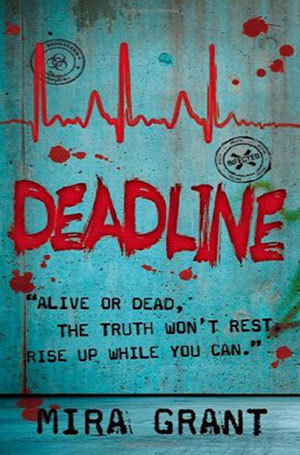
If only the exposition were the problem with Deadline, but it isn't. Instead, in style it's the repetition, in themes the classism (with undertones of unintentional racism and sexism). Fortunately the substance is all right, so I can easily see people digging Deadline, but it annoyed the unliving hell out of me.
First, this book badly needs an editor. The protagonist's mental problems, though kind of interesting, are hammered home so repetitively that the reader will get annoyed the fifth, or sixth, or twentieth time they're brought up, as well as the other characters reacting to it. We get it, your readers really aren't quite as stupid as that.
Second, this is a catastrophe story where the survivors are the happy 1% who have their fortified mansions, who have the President on speed-dial, who were born with all the privileges and advantages that made it …
"Nobody here needs the exposition."
If only the exposition were the problem with Deadline, but it isn't. Instead, in style it's the repetition, in themes the classism (with undertones of unintentional racism and sexism). Fortunately the substance is all right, so I can easily see people digging Deadline, but it annoyed the unliving hell out of me.
First, this book badly needs an editor. The protagonist's mental problems, though kind of interesting, are hammered home so repetitively that the reader will get annoyed the fifth, or sixth, or twentieth time they're brought up, as well as the other characters reacting to it. We get it, your readers really aren't quite as stupid as that.
Second, this is a catastrophe story where the survivors are the happy 1% who have their fortified mansions, who have the President on speed-dial, who were born with all the privileges and advantages that made it possible to survive the zombie apocalypse. Everybody's so damn special it starts to grate after a while. Even though it makes sense the annoying rich are most likely to survive a cataclysm like the one described, the less fortunate only merit about a single off-hand mention: otherwise it's rich assholes all the way down. Maybe the whole thing wasn't quite as tone-deaf fifteen years ago, but it certainly reads that way now. When reading about how Shaun feels happy and safe among trigger-happy redneck truckers who will shoot anyone who as much as looks like a zombie, it's hard not to suspect that anyone with the wrong skin tone did, in fact, probably get shot as one, just as a precaution, y'know. Again: this is certainly unintended, but knowing what we now know about America, that is the way it reads, but it's never addressed.
There are interesting points to be made on surveillance, security and fear in society, and actually the theme of a society living in constant fear and letting that fear define pretty much everything was interesting and not badly handled. The writing certainly wasn't clumsy (even though it did keep repeating itself) and I found the story gripping. But then there is the subtext that Sex = Evil, Guns & Violence = Good, and we're so deep in murky American values that I almost couldn't keep reading. Again: zombie novel, so the values sort of come with the territory, but I'm betting none of that was intentional. Or maybe it was. Maybe I'm missing some clever satire here, it wouldn't be the first time.
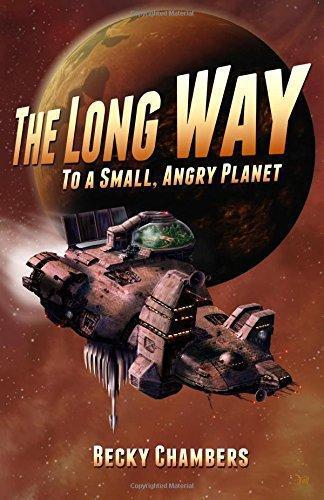
Follow a motley crew on an exciting journey through space-and one adventurous young explorer who …
Review of 'The long way to a small, angry planet' on 'Goodreads'
3 stars
What a difficult book to review. On one hand, I can see why some people would like this - it was certainly proficiently written and character-oriented. On the other hand, I found the characters mostly dull and two-dimensional, the stakes low, the universe uninspired. I was fully prepared to give it two stars, but every time it kind of surprised me and did something slightly unexpected.
Normally I'd call for an editor to cut out the boring bits, except that here the boring bits were kind of the point. So yeah, someone's favourite book probably, just not mine.
What a difficult book to review. On one hand, I can see why some people would like this - it was certainly proficiently written and character-oriented. On the other hand, I found the characters mostly dull and two-dimensional, the stakes low, the universe uninspired. I was fully prepared to give it two stars, but every time it kind of surprised me and did something slightly unexpected.
Normally I'd call for an editor to cut out the boring bits, except that here the boring bits were kind of the point. So yeah, someone's favourite book probably, just not mine.
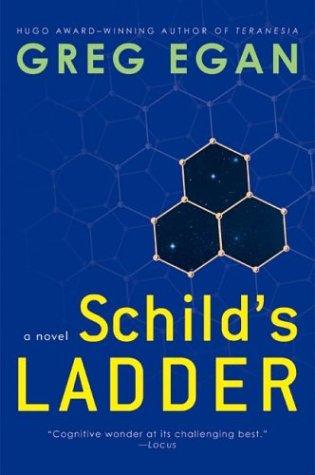
I'd like to write hard sci-fi, but Greg Egan has set the bar so unbelievably high...
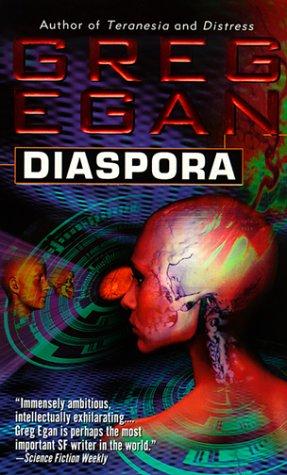
Diaspora is simply brilliant. Starting from the birth of an artificial mind, it blossoms into a breathtaking tale of cosmology, peril, exploration, discovery and meditation on what it means to be sentient. These are recurring themes in his work, but the sheer Matryoshka doll -like scale of Diaspora is awe-inspiring unlike anything else.
I'd like to write hard sci-fi, but Greg Egan has set the bar so unbelievably high...
Diaspora is simply brilliant. Starting from the birth of an artificial mind, it blossoms into a breathtaking tale of cosmology, peril, exploration, discovery and meditation on what it means to be sentient. These are recurring themes in his work, but the sheer Matryoshka doll -like scale of Diaspora is awe-inspiring unlike anything else.