On the prose level, I was not into it; every turn of phrase was a one-two punching unkilled darling. Although the conlanging and formality levels were great.
On the macro level is where I loved the book! Separate vignettes that end up braiding together almost like the typical Pratchett or Dumas structure. Fun idea and great setting and characters.
the usual fantasy-racism and sexism with a bit of homomisia sprinkled in. the author should just have written the novel in 19th century europe, the fantasy aspect is rarely used at all.
the book seems to want me to have sympathy with an absolutist ruler. 🙄 and what's up with all these different names, and sometimes more than one name for one person? feels like there were a hundred or so names used. oof! and then there are perfectly translatable concepts that are left in some kind of elven language, and sometimes the characters speak really old english? why?!?
at least the story itself is somewhat interesting and has potential, but i'm not gonna read the next books.
the usual fantasy-racism and sexism with a bit of homomisia sprinkled in. the author should just have written the novel in 19th century europe, the fantasy aspect is rarely used at all.
the book seems to want me to have sympathy with an absolutist ruler. 🙄 and what's up with all these different names, and sometimes more than one name for one person? feels like there were a hundred or so names used. oof! and then there are perfectly translatable concepts that are left in some kind of elven language, and sometimes the characters speak really old english? why?!?
at least the story itself is somewhat interesting and has potential, but i'm not gonna read the next books.
I liked the book. I'd read even more if there was more to read. I found the names to be a bit obstructive to reading. They are too similar, too numerous and could have just as well done without them in many cases.
Not bad but stuffy names
I liked the book. I'd read even more if there was more to read. I found the names to be a bit obstructive to reading. They are too similar, too numerous and could have just as well done without them in many cases.
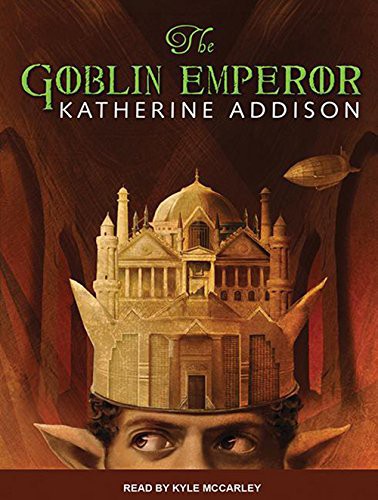
A slow-moving fantasy about an ostracized son of an emperor who suddenly finds himself an emperor. The story focuses on court politics, tensions between the emperor - who is clearly above everyone else in the society - and the rest of the society.
... and I mean above. Emperor Maia is kind, decent, thoughtful, listening ruler who tries to make friends everywhere and, in the end, probably succeeds. His background as a half-blood (the former emperor being an elf and Maia's mother a goblin) makes him a bit uncertain, his lack of education a bit socially awkward, but those things also allow him to break through conventions on how the ruling class should behave.
I thoroughly enjoyed the slow moving court politics, Maia's awakening into power and others' awakening into their emperor. Somewhere there's a nagging feeling that Maia is too good - the biggest mistakes he makes are on …
A slow-moving fantasy about an ostracized son of an emperor who suddenly finds himself an emperor. The story focuses on court politics, tensions between the emperor - who is clearly above everyone else in the society - and the rest of the society.
... and I mean above. Emperor Maia is kind, decent, thoughtful, listening ruler who tries to make friends everywhere and, in the end, probably succeeds. His background as a half-blood (the former emperor being an elf and Maia's mother a goblin) makes him a bit uncertain, his lack of education a bit socially awkward, but those things also allow him to break through conventions on how the ruling class should behave.
I thoroughly enjoyed the slow moving court politics, Maia's awakening into power and others' awakening into their emperor. Somewhere there's a nagging feeling that Maia is too good - the biggest mistakes he makes are on the level of apologizing from his subjects. One thing I didn't enjoy is the barrage of invented words - even though you get an idea of them as you read (and there's a description of some of those at the end of the book - nice to notice after you've read the book - they seem to be there just to give an idea of a foreign world without any real meaning.
Even though the book leaves an opening for sequels, I almost hope that doesn't happen; it would either be too much of a good emperor parade, or it would require changing the character of Maia. There are aspects to the story that practically shouts for more thorough handling, though, so maybe something set into the same world - say, in the neighboring goblin empire - would be nice.
That is actually something that is, in my opinion, missing from the book. Even though Maia's goblin heritage is mentioned, repeatedly, the structure of the society is left kind of unclear. Goblins seem to be very much in the working class - but on the other hand, neighboring Avar empire is goblin-led and the former emperor had a goblin as a wife. The situation spells both internal and external conflict, but the best we get is the fact that Maia considers himself ugly because of his goblin-like features.
Another thing that annoys me is the heavy-handed reference to socialist movement in the flyer factory. Maybe it's just me, but depicting the workers as atheist heathens who want to bring down the ruling class by means of conspiratorial murders doesn't really fit the tone of the rest of the book.